I Started Again When He DiedSmoking
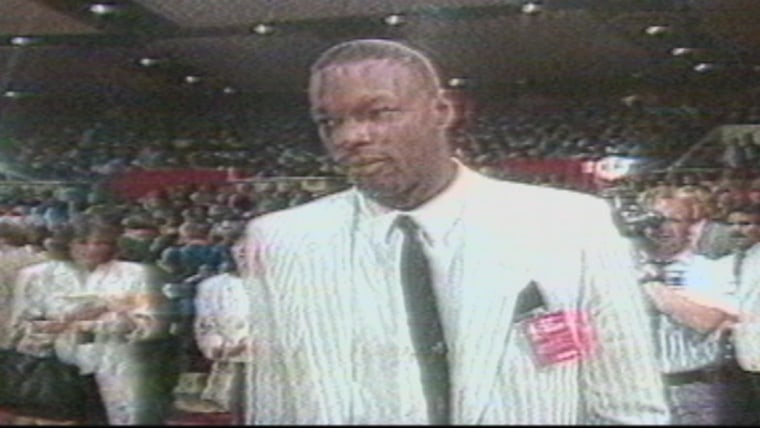
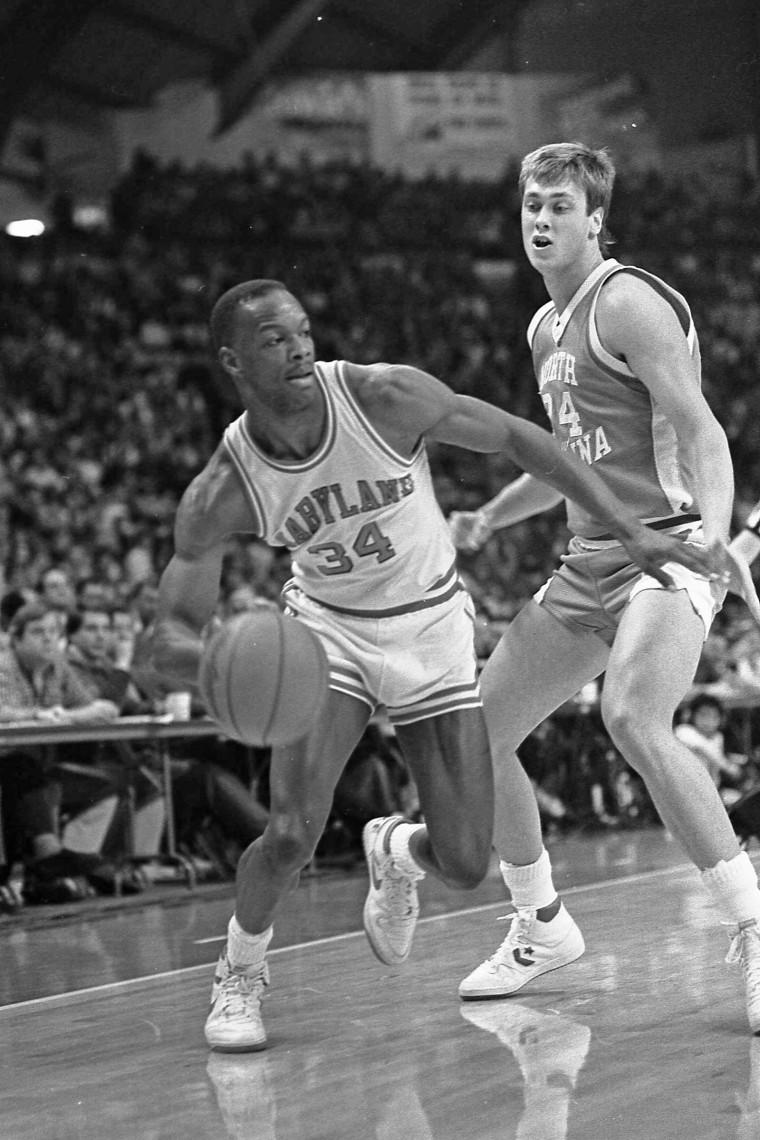
In life, Len Bias was basketball'southward side by side slap-up hope, contender for a crown that went instead to Michael Jordan.
In death, he became a trigger for the war on drugs.
Bias' 1986 cocaine overdose helped sparked a panic, stoked past fake rumors and a high-stakes political entrada, that culminated in a constabulary that swept thousands of depression-level drug offenders — most of them young and black — into prison house.
30 years afterward, America is still reeling from the impact.
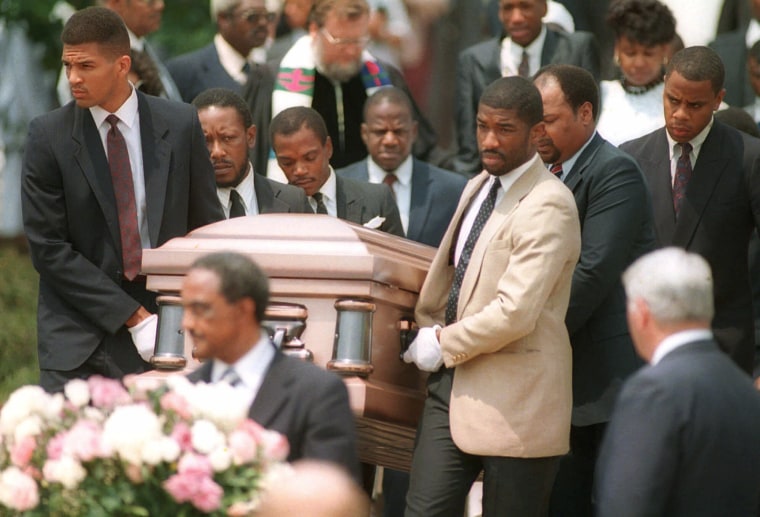
The new law established mandatory minimum drug sentences, provisions that exacerbated racial disparities, led to an explosion in prison populations and helped lay the background for grievances that erupted in anti-police riots in Baltimore last yr and in Ferguson, Missouri, in 2014. Those effects are now fueling a bipartisan reform attempt.
"The law that flowed from this completely destroyed the federal justice organisation and tarnished the reputation of the whole American justice organization," said Eric Sterling, who as a immature congressional adjutant helped draft the legislation and has since worked to unwind its effects.
Fear and politics
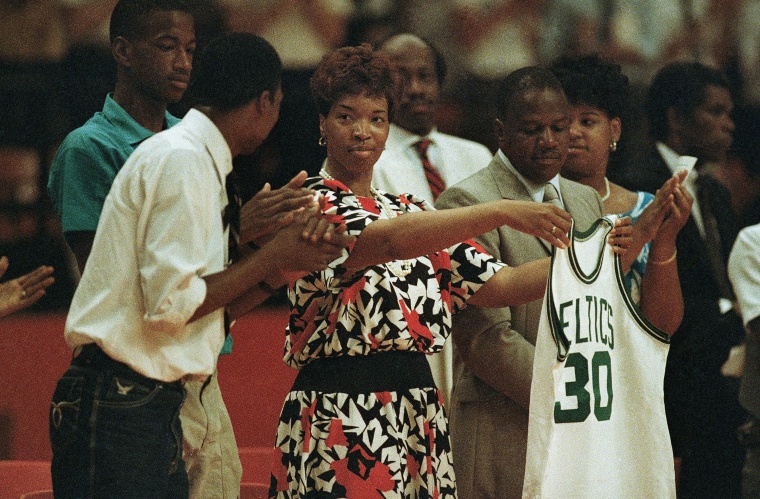
Sterling was a lawyer for the Firm Judiciary Committee when Leonard Kevin "Len" Bias, an All-American forrad at the University of Maryland, died on June xix, 1986, two days after being drafted by the NBA champion Boston Celtics. A rumor, spread in the press, said he'd died smoking crack, a cheap grade of cocaine that was being blamed for increasing crime and all sorts of social ills. It turned out that Bias had in fact snorted powder cocaine, only by the time that became clear the crevice frenzy was in total flower.
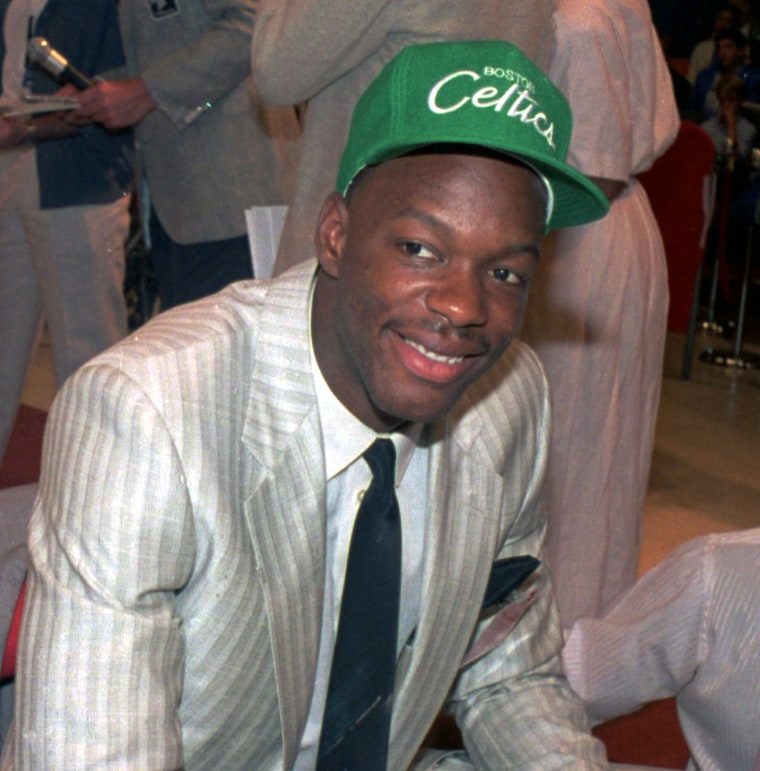
Bias' death came as Business firm Speaker Tip O'Neill of Massachusetts was leading Democrats' accuse to outmaneuver Republicans in the approaching midterm congressional elections. O'Neill, a canny politico, heard his constituents clamoring about Bias and saw drugs as the path to victory. In four months — lightning speed in Congress — the Anti-Drug Abuse Human activity of 1986 became law.
The speed with which it was passed and signed by President Ronald Reagan meant there was little research into the bill'southward implications. No committee analyzed its key provisions, or held hearings, according to a later assay by the U.Southward. Sentencing Committee.
The commission found that lawmakers were driven by the belief that drugs had become an "epidemic," with scissure at the forefront. Reflecting breathless news accounts — Fourth dimension named cleft the "Result of the Yr" and NBC News called it "America's drug of pick" — Congress saw the drug as more dangerous, more addictive and more than attractive to young people than pulverisation cocaine. Virtually of those assumptions turned out to be untrue, although experts do arraign cleft in part for a rise in crime during that era.
Bias "became the face up of the urgency for this effort," Sterling said.
'Dark chapter'
The law's most lasting legacy was a set up of mandatory minimum sentences for drug crimes, which Congress had repealed xvi years earlier. They were weighted heavily against cleft, requiring but 5 grams to trigger a v-year prison house sentence, compared to 500 grams for powder cocaine. The sentences rose to 10 years with 50 grams of crevice and 5,000 grams of powder. Other drugs had their ain required penalties.
The goal was to impose long prison terms on high-level dealers, but the hastily drawn provisions were based on little existent-world testify, researchers have since pointed out. The amounts fell far beneath what many kingpin-level traffickers handled, and the laws were more frequently used by cops and prosecutors against street-level operatives, including people tangentially involved in the drug business. Enforcement fell mainly on poor residents of inner cities, where dealing was more likely to be washed in the open, and where law already focused their patrols. Later studies showed that whites and blacks used crevice at roughly the same rates.
"It was a real low point and dark affiliate in the state of war on drugs," said Michael Collins, deputy director of the Drug Policy Alliance's Office of National Affairs. "Information technology was a bespeak where hysteria dominated over evidence and it was really the catalyst for a lot of the prison house problems nosotros are tryingto reform today."
Kevin Band, vice president of Families Against Mandatory Minimums, said that once drug crimes had mandatory minimums, pre-determined penalties for other crimes followed, including illegal possession of guns, immigration violations, identity theft, sexual activity crimes, fraud. "The '86 act has caused and so much damage because it ratcheted up sentences for everyone," he said.
Unimagined legacy
Amongst the thousands caught in the new legal trap was Derrick Curry, a babyhood friend of Len Bias, and his younger brother, Jay, who was murdered in 1990. Curry, like the Bias brothers, was a star basketball player at Northwestern High Schoolhouse in Hyattsville, Maryland. Just after struggling in college, Curry returned home and began hanging out with friends involved in the drug business. Federal agents investigating the crew pulled him over in a car that contained a large rock of crack. He had no criminal tape, merely mandatory minimums forced a estimate to sentence him to more than nineteen years in prison. Pecker Clinton pardoned Curry in the waning days of his presidency in 2001.
Curry said terminal week that the anniversary of Bias' expiry — and the reminder of what it wrought — stirred upwardly all sorts of regrets and what-ifs. "So many people think ... Len Bias and his legacy (were) simply basketball, and a lot of people don't know the impact his death caused — in so many peoples' lives around him and (those of) people who didn't know him or had anything to practise with him," Curry said.
In 1985, the year earlier the Anti-Drug Abuse Act passed, there were virtually 35,000 people in federal prison, nine,500 of whom were in on drug charges, co-ordinate to federal information analyzed by The Sentencing Project. Today, co-ordinate to the U.South. Bureau of Prisons, at that place are almost 195,000 federal inmates, with more than 85,000 serving time for drugs. About 3-quarters of drug offenders in federal prison are black or Hispanic, according to the Bureau of Justice Statistics.
A like tendency unfolded in state systems. The combined number of state and federal inmates climbed from 715,00 in 1990 to i.5 million in 2014.
Keeping so many people backside bars has contributed to a dramatic reject in crime rates. But it has come at a steep cost.
Researchers say the era of mass incarceration has greatly damaged American lodge, especially for minorities, the poor and residents of inner cities. Millions are now unable to concur steady jobs, maintain housing, keep their families together or vote.
Coming 'full circle'
At that place have been some incremental changes. In 2010, the Fair Sentencing Act refined the cleft-pulverisation punishment ratio from 100-i to 18-1 — an improvement that critics say withal reflects the arbitrariness of the original law. The Sentencing Commission has loosened some of its guidelines tied to mandatory minimum laws, allowing thousands of nonviolent, low-level drug offenders to leave prison early on. President Barack Obama has granted charity to many others. And his Justice Department has ordered prosecutors to focus on high-level dealers.
But the major goal remains unfulfilled: passage of the Sentencing Reform and Corrections Act, which would allow judges to impose shorter prison house terms in sure scenarios — and make the Fair Sentencing Act retroactive. It is supported by Republicans and Democrats, only not enough to overcome election-year squabbling.
"Now we've come full circle, 30 years later, to realize that (the Anti-Drug Abuse Act) was not a smart move," said Inimai Chettiar, managing director of the Justice Plan at the Brennan Heart for Justice in New York.
The reformers include Eric Sterling, who left government soon after his feel with the 1986 law and formed the The Criminal Justice Policy Foundation, which advocates for a new American drug policy. They too include Back-scratch, who joined Families Confronting Mandatory Minimums and speaks publicly nigh his experience.
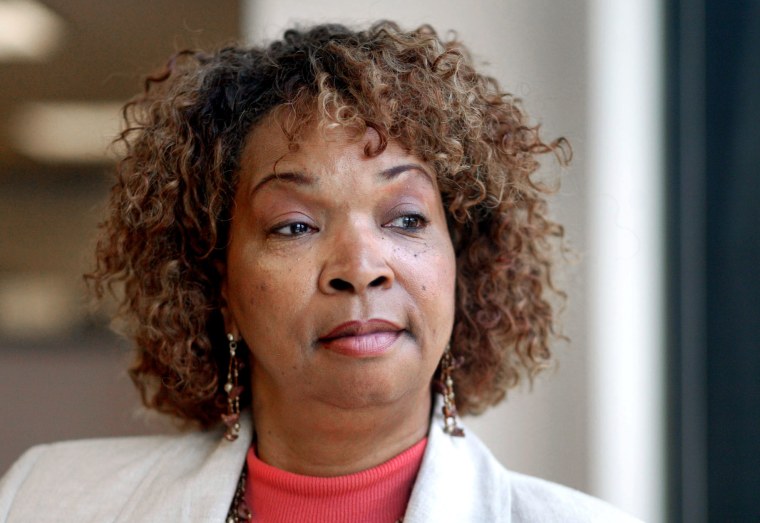
Then at that place is Lonise Bias, Len'due south mother. The death of her ii eldest sons left her seeing "null merely utter darkness," she said last week. Simply then she found purpose by waging her own war on drugs — not to anteroom for sentencing reform, but to uplift children.
She is a motivational speaker, spreading what she calls a "message of promise" based on encouragement, compassion and good decision-making.
On Sun, the 30th anniversary of Len's death, Lonise Bias will assemble her 2 remaining children and her five grandchildren in Maryland and celebrate what she has, rather than what she'due south lost.
"We're going to have a brawl," she said.
They'll finish the twenty-four hour period by watching game seven of the NBA finals. And endeavour not to call up about what might have been.
Source: https://www.nbcnews.com/news/us-news/30-years-after-basketball-star-len-bias-death-its-drug-n593731
0 Response to "I Started Again When He DiedSmoking"
Post a Comment